-
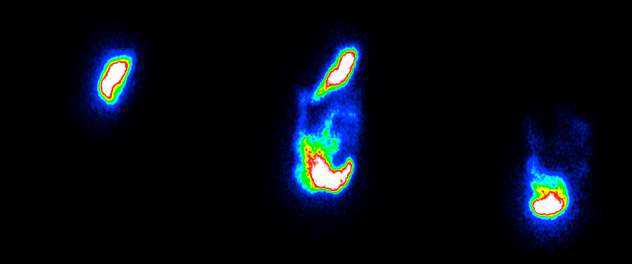
Abdominal scan shows how fast the stomach empties
Dr. Acosta's Precision Medicine for Obesity Lab uses abdominal scans from a gamma camera to study how fast the stomach empties solids and liquids after radiolabeled meal ingestion.
-

Attacking the causes of obesity from the inside out
The Acosta Lab studies the mechanisms behind food intake regulation and weight to create individualized therapies for obesity.
-
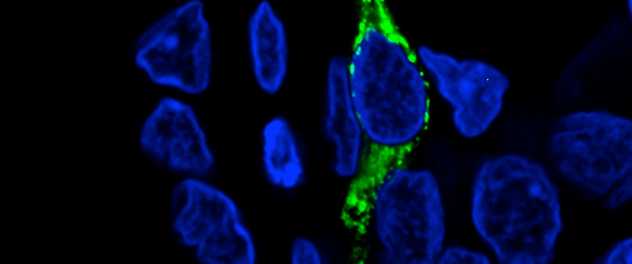
Studying human enteroendocrine cell biology
Dr. Acosta's lab used immunofluorescence confocal microscopy to show glucagon-like peptide-1 (GLP-1; green)-producing enteroendocrine L cells (blue) within the human gastrointestinal mucosa.
-
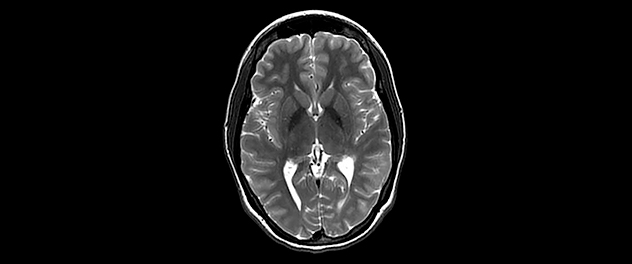
Discovering how the brain controls appetite
Dr. Acosta's lab uses functional MRI to study how the brain interacts with the gut to control appetite and its response to obesity treatments.
Overview
The Precision Medicine for Obesity Laboratory at Mayo Clinic is addressing the worldwide rise in obesity by developing new individualized treatments for obesity and cardiometabolic diseases. Andres J. Acosta, M.D., Ph.D., leads this multidisciplinary research with funding from the National Institutes of Health.
Current strategies for treating obesity rely on a one-size-fits-all approach. As a result, people's responses to obesity treatments — such as medications, diet and lifestyle interventions, and surgery — continue to be hit-or-miss, with wide-ranging effectiveness and outcomes.
The Precision Medicine for Obesity Lab focuses on understanding and characterizing the complex differences among people living with this disease. The lab's recent studies have found several unique subgroups among people with obesity. These groups are known as obesity-related phenotypes. People within each group have unique changes in their bodies that are associated with different responses to obesity treatments, including lifestyle interventions, medications and surgery.
The lab also aims to explain the complicated physical factors, processes and mechanisms that lead to the development of each distinct phenotype. The goal is to introduce new interventions for obesity that are personalized for each patient and that make weight-loss medicines more effective.
The lab relies on a strong multidisciplinary team with expertise in translational science, human physiology, behavioral sciences, multi-omics and big data analytics. This comprehensive approach advances strong bench-to-bedside research supported by collaborators across Mayo Clinic and at other institutions.