-

Driving brain and spine cancer research
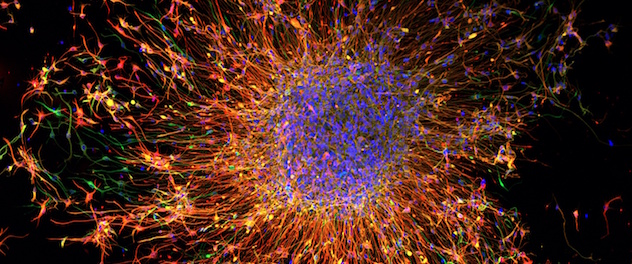
Dr. Quinones-Hinojosa's Brain Tumor Stem Cell Research Lab at Mayo Clinic studies the molecular pathways of glioblastoma, chordoma and metastatic brain cancer to find new therapies for patients.
-
Driving brain and spine cancer research
Dr. Quinones-Hinojosa's Brain Tumor Stem Cell Research Lab at Mayo Clinic studies the molecular pathways of glioblastoma, chordoma and metastatic brain cancer to find new therapies for patients.
-
Driving brain and spine cancer research
Dr. Quinones-Hinojosa's Brain Tumor Stem Cell Research Lab at Mayo Clinic studies the molecular pathways of glioblastoma, chordoma and metastatic brain cancer to find new therapies for patients.
Overview
The Brain Tumor Stem Cell Research Laboratory of Alfredo Quinones-Hinojosa, M.D., focuses on elucidating molecular and cellular pathways involved in the progression of tumors arising in the central nervous system, particularly glioblastoma. In collaboration with partners across multiple Mayo Clinic departments and other research institutions, the lab team designs novel therapeutic agents and explores the potential for translation into human clinical trials.
Areas of interest
Specific areas of interest in Dr. Quinones-Hinojosa's laboratory include:
- Elucidating important molecular players involved in brain tumor invasion and migration.
- Designing novel cellular therapies using adipose-derived mesenchymal stem cells to treat brain tumors.
- Developing effective approaches to target brain tumors using novel local and systemic therapies.
- Developing clinically relevant animal models to study the progression of brain tumors.
The research team studies glioblastoma, the most common and aggressive brain cancer. Glioblastoma has a high recurrence rate and dismal prognosis, with only 3.3% of patients surviving five years.
In particular, the research group studies tumor-propagating cells that comprise a minority population of highly tumorigenic clones. These cells display stemness features and are believed to be brain tumor initiating cells. Brain tumor initiating cells are the most aggressive and malignant tumor-propagating cells. They are believed to be the main culprits of therapy resistance and recurrence seen in patients today.
Dr. Quinones-Hinojosa's lab strives to understand the molecular drivers of invasion and cellular engines of brain tumor initiating cells and discover new therapeutic modalities to permanently eliminate cancers in the central nervous system.