-
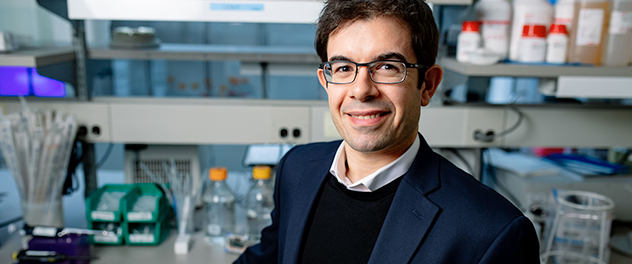
Discovering ways to delay the onset of age-related diseases
Joao Passos, Ph.D., is developing new early and preventive interventions against age-associated chronic disease in his Cell and Molecular Aging Lab.
-
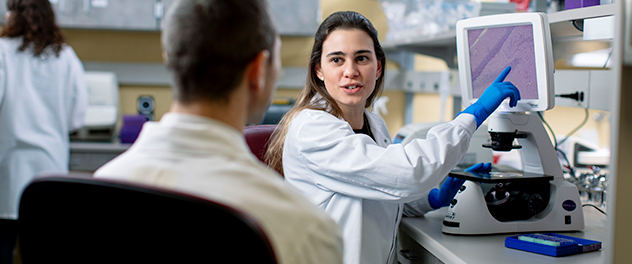
Increasing health span during aging
The Cell and Molecular Aging Lab is discovering the mechanisms that mitochondria use to drive senescence with the hope of finding new therapies to increase health span during aging.
-
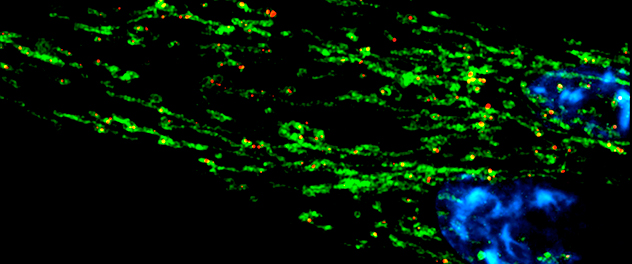
Mitochondria changes influence senescent cells
In the Cell and Molecular Aging Lab, super-resolution microscopy visualizes changes in mitochondria (green), mtDNA (red) and nucleus (blue).
-
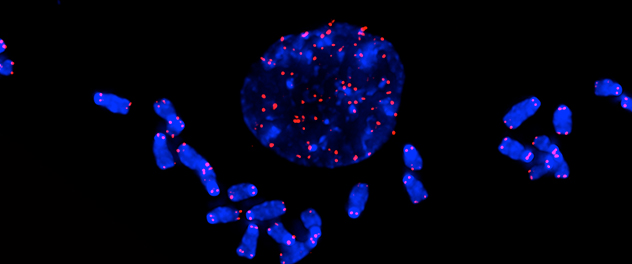
Telomere studies show changes in aging and aging diseases
Dr. Passos' Cell and Molecular Aging Lab uses fluorescent in situ hybridization to detect telomeres (red) and chromosomes (blue) to study changes in aging and aging diseases.
Overview
The continued increase in life expectancy is a great civilizational success, and recent medical advances are significantly prolonging the lives of older people. Yet, with people living longer, dealing with increased incidence of chronic diseases associated with aging becomes a major challenge.
The goal of the Cell and Molecular Aging Laboratory led by Joao Passos, Ph.D., is to develop new early and preventive interventions against age-associated chronic disease. The lab uses a combination of cell and mouse models to investigate mechanisms of aging and potential interventions. Research focus areas involve cellular senescence, telomeres and mitochondrial biology.
Dr. Passos' research team seeks to achieve a deeper understanding of why the body experiences the features of aging to delay the onset of multiple diseases and significantly improve the quality of life of older people.
Research focus areas
Dr. Passos' lab has pioneered the investigation of the role of telomere dysfunction in cellular senescence during aging and age-related disease. His research team has shown that there is a role for telomere dysfunction in multiple organs during aging and in several age-related chronic diseases. Dr. Passos' lab has developed unique methodologies to analyze telomere dysfunction using super-resolution microscopy and reporter systems that allow telomere damage dynamics to be seen in live cells.
Dr. Passos' research has shown that as people age, mitochondria become dysfunctional and produce excessive reactive oxygen species that can accelerate telomere damage, inducing cellular senescence. Furthermore, mitochondria are key regulators of the proinflammatory phenotype characteristic of senescent cells — a major contributor to age-related diseases.
The research team is investigating the mechanisms that mitochondria use to drive senescence. The hope is to find new therapies to increase health span during aging.
Extending health span through discovery
Beyond his work in the Cell and Molecular Aging Lab, Dr. Passos serves as associate director of the Robert and Arlene Kogod Center on Aging. The center is dedicated to developing innovative research programs and advancing ideas that deepen the understanding of the biology of aging. The center's efforts focus on extending health span and improving quality of life in older adults. This is measured by years of independent living and freedom from age-related diseases and disabilities.
Dr. Passos directs the center's Discovery Science theme. This theme is designed to expand and strengthen discovery-driven research into the fundamental mechanisms of aging. The goal is to identify therapeutically actionable targets capable of transforming human health.