-
Studying lung cell function in health and disease
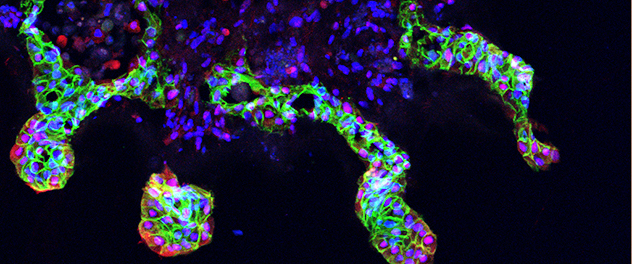
Dr. Tschumperlin's lab studies how cells sense, respond to and shape the mechanical environment of the lung and other organs. The goal is to develop new ways to prevent or treat diseases such as pulmonary fibrosis. Above is a lung organoid formed from human bronchial epithelium, fibroblasts and endothelium.
-
Targeting fibroblast pathways
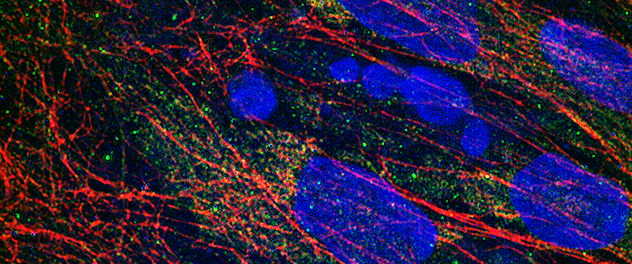
The lab's team is discovering novel ways to regulate the biology of fibroblasts to stop or reverse the tissue scarring they cause in fibrosis. Above, human lung fibroblasts deposit collagen (red) into the extracellular matrix.
-
Cell communication in health and disease
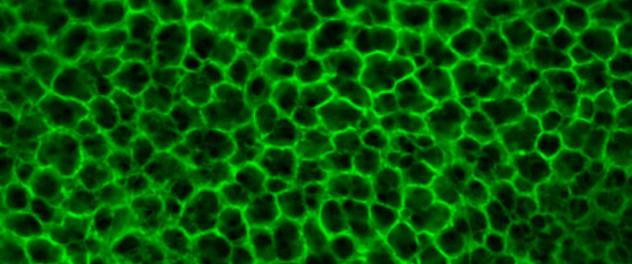
The Tschumperlin lab studies the interactions between cells that help maintain homeostasis in healthy lungs and are disrupted in injury or disease. Above is delicate alveolar architecture of the lung as seen by immunofluorescence imaging of laminin.
Overview
The Tissue Repair and Mechanobiology Laboratory led by Daniel J. Tschumperlin, Ph.D., investigates fibrotic diseases of the respiratory system and other organs, with a focus on the cellular and molecular mechanisms of tissue injury, repair, fibrosis and resolution. These processes are central to a variety of disorders and their treatments, including fibrotic scarring of the lungs and other organs.
The body's internal organs depend on the interactions of numerous cell types within a delicate architectural framework formed by the extracellular matrix. The Tissue Repair and Mechanobiology Lab investigates how:
- Injury and remodeling disturb the matrix architecture and mechanical forces present in healthy organs.
- The interplay among the mechanical environment, cellular signaling and tissue remodeling results in organ dysfunction.
- These interactions can be targeted to restore organ function.
By understanding how cells sense, respond to and shape their mechanical environments in health and disease, Dr. Tschumperlin's research team is working to develop new approaches to prevent or reverse scarring and restore organ function.
Focus areas include:
- Mechanobiology of pulmonary fibrosis. Dr. Tschumperlin's research team is defining the changes in tissue stiffness that accompany pulmonary fibrosis and studying the signaling mechanisms that regulate it.
- Discovering novel regulators of fibroblast biology. The lab's research is aimed at discovering new regulatory pathways that control the activation of fibroblasts — the cells that cause fibrosis.
- Cell-cell communication and lung repair. The lab is investigating how coordinated interactions of multiple cell types, including epithelial, endothelial and fibroblast, maintain and restore optimal lung structure and function after injury.
Affiliations
Dr. Tschumperlin's lab is affiliated with these Mayo Clinic research areas: