-
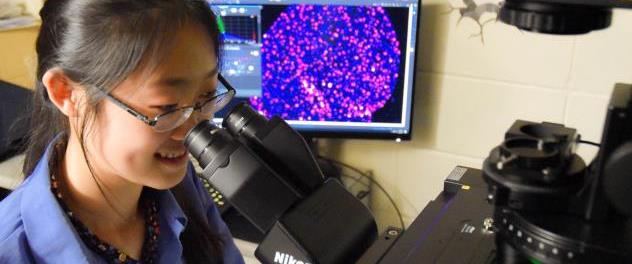
Illuminating disease pathways
The Translational Neuroproteomics Laboratory uses advanced fluorescence microscopy methods to identify pathological changes that can form the basis for therapy development.
-
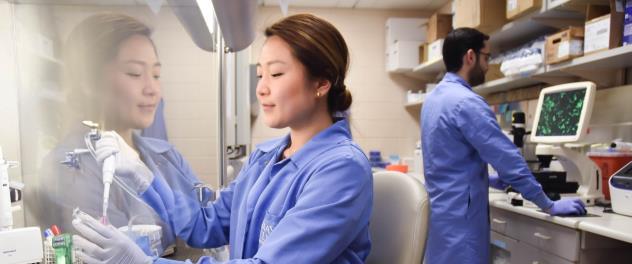
Disease in a dish
Dr. Rossoll's Translational Neuroproteomics Laboratory is discovering therapeutic targets for neurodegenerative diseases by modeling disease processes in cell and tissue culture.
-
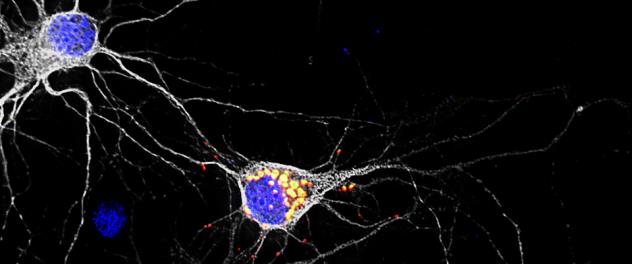
Targeting protein aggregation
Dr. Rossoll's team is using cutting-edge methods to identify ways to target the formation of pathological protein aggregates in neurons. (Image: Ching-Chieh Ian Chou, Ph.D.)
Overview
The Translational Neuroproteomics Laboratory, which is led by Wilfried O. Rossoll, Ph.D., is dedicated to unraveling how abnormal protein aggregation drives devastating neurodegenerative diseases such as amyotrophic lateral sclerosis (ALS), frontotemporal dementia, Alzheimer's disease and related conditions. The lab also seeks to develop strategies to counteract these proteinopathies.
At the core of our mission is the use of state-of-the-art mass spectrometry-based proteomics and high-resolution fluorescence microscopy to comprehensively characterize the molecular composition of disease-causing protein aggregates. The goal is to identify new therapeutic targets. These investigations target mainly TDP-43 and tau aggregates — hallmarks of ALS, frontotemporal dementia and Alzheimer's disease, as well as other common pathologies such as α-synuclein in Parkinson's and Lewy body dementia.
Using these advanced molecular insights, Dr. Rossoll's team conducts mechanistic studies in cell and animal models to pinpoint how aggregation occurs and spreads, and to validate interventions that could alter disease progression. Using identified disease modifiers and drawing from mechanistic studies to understand their mode of action, the Translational Neuroproteomics Lab seeks to develop therapies for neurodegenerative proteinopathies.