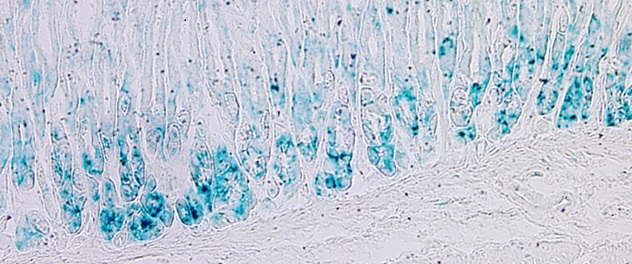
 Interventions to regenerate stem cells
The GI Stem Cell Research Lab led by Yujiro Hayashi, Ph.D., studies stem cell biology of the gastrointestinal tract in health and disease. Dr. Hayashi's lab is identifying novel molecular and epigenetic pathways and exploring sustainable treatment options for gastrointestinal dysfunction by targeting stem cells in the gastrointestinal tract.
Overview
The GI Stem Cell Research Lab led by Yujiro Hayashi, Ph.D., is investigating the pathophysiology of aging-related gastrointestinal dysfunction. The lab's research is addressing the role of stem cell aging in gastrointestinal dysfunction, including reduced compliance and food intake in aging. The lab uses cutting-edge techniques such as genome-wide epigenetic profiling, integrated omics analysis and optogenetics. Dr. Hayashi is investigating the utility of a drug already approved for human use to alleviate aging-associated gastric dysfunction and promote healthy aging.
With the number of older adults rapidly increasing, age-related diseases and disorders represent a major healthcare burden. These diseases and disorders are associated with a decline in the function of most organs. Gastrointestinal motor function also declines with age.
Aging-associated gastrointestinal motor dysfunction includes:
- Esophageal reflux.
- Early satiety and anorexia.
- Irritable bowel syndrome.
- Constipation
- Fecal incontinence.
Although these diseases and conditions are not fatal themselves, they negatively affect quality of life and predispose older adults to other diseases, protein-energy malnutrition, sarcopenia and frailty. Furthermore, recent reports have linked low dietary intake to increased overall mortality in older adults, suggesting that higher dietary consumption may be protective for these people. In other words, reduced food intake due to gastrointestinal dysfunction may contribute to increased overall age-related mortality. Therefore, it is important to understand the mechanisms underlying age-related gastrointestinal dysfunction in the context of healthy aging and longevity.
The mechanisms of age-related gastrointestinal dysfunction are complicated and remain incompletely understood. This is in part due to the nonspecific symptoms of these conditions and lack of sufficient medical attention.
Data obtained from Dr. Hayashi's research will provide rationale for discovering new therapeutic targets. Furthermore, Dr. Hayashi aims to reveal a novel, pharmacologically realizable therapeutic approach to prevent gastric pacemaker stem cell decline and age-related gastric dysfunction. This advance could improve quality of life. He also aims to discover previously unrecognized mechanisms of stem cell aging that may be of general significance.