Mayo Clinic Biobank
As a leading healthcare organization, Mayo Clinic has a wealth of data on tens of thousands of patients — many of whom return over the course of their lives.
Many specimens in Mayo's biobanks are linked to patient health records, allowing investigators to compare physical samples with patient outcomes over long periods of time. This combination of health data and blood derivatives provides a powerful resource for scientific discovery.
The Mayo Clinic Biobank is an extensive, wide-spectrum biobank that represents the broad range of patients seen at Mayo Clinic. Characteristics of the Mayo Clinic Biobank include:
- 50,000 participants ages 18 and up.
- Three-fourths of participants joined when they were between 51 and 80 years old.
- Half of participants have 15 to 20 years of electronic health record data.
- Diseases most frequently reported by participants include hyperlipidemia, hypertension, osteoarthritis and a large range of additional phenotypes.
With the Mayo Clinic Biobank, Mayo Clinic Bioservices offers investigators unparalleled access to a data-rich, versatile resource to tackle tough research questions.
Controls and disease-specific samples for unique research needs
The Mayo Clinic Biobank addresses a pressing research need in biomedical research: finding controls with the quality that researchers require. Having reached its goal of enrolling 50,000 patients, the biobank includes a broad range of diseases present in Mayo Clinic's patient population. The Mayo Clinic Biobank not only provides controls with the quality investigators demand but also it offers access to common disease-specific samples that satisfy specific research criteria.
Key aspects of the Mayo Clinic Biobank include:
- 50,000 patients.
- Unique quality and depth of data.
- Electronic health record and patient-provided data.
- Support for biomarker discovery and validation.
Sample types
The Mayo Clinic Biobank is a collection of blood derivatives, including:
- DNA.
- Serum.
- Plasma: EDTA, platelet-poor.
- Plasma: sodium citrate.
- White blood cells.
- Slow frozen cells (for 10% of participants).
Available data
The Mayo Clinic Biobank's extensive data library includes:
- Electronic health record data 15 to 20 years in length for 25,000 patients.
- Records of medications, diagnoses, lab test records and more.
- Self-reported data from participants on current health, family health history and lifestyle factors known to confer risk of disease.
- Follow-up questionnaire four years after enrollment.
- Genetic data including genome-wide association study and DNA sequence data (selected cases).
- Option to recontact participants for additional data or studies.
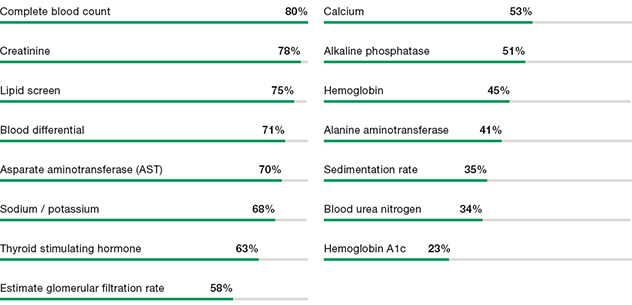
Top lab tests measured
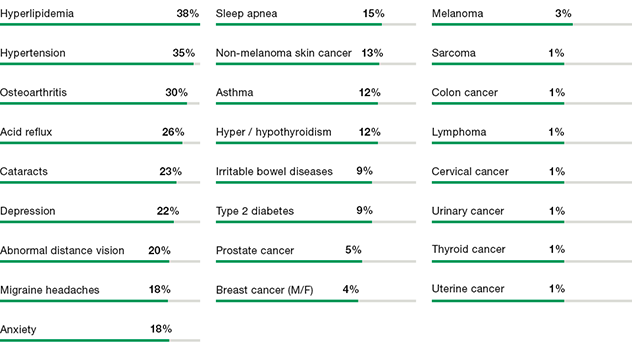
Most frequent diseases (self-reported)
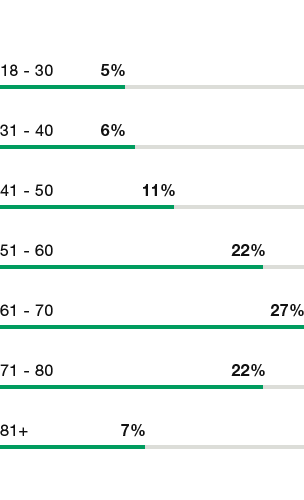
Age of participants