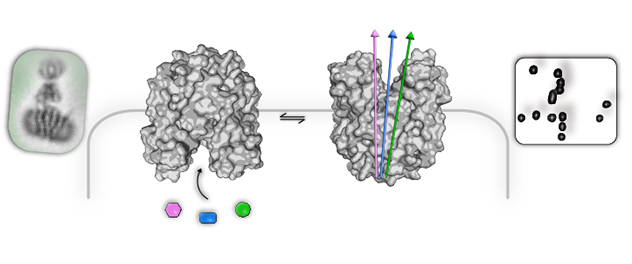
 Antibiotic resistance mechanisms in action
The lab uses cryoelectron microscopy and nuclear magnetic resonance spectroscopy to reveal different conformations of the efflux transporter needed to move antibiotics from inside to outside bacteria, which confers antibiotic resistance.
Overview
The Chemical Biology of Microbes and Membrane Proteins Laboratory led by Nate Traaseth, Ph.D., studies membrane proteins involved in molecular transport and receptors that mediate cellular signaling. The lab uses approaches in chemical biology, structural biology, biochemistry and cell biology to elucidate the structure and function of these proteins. The lab's goals are to understand the roles of membrane proteins in health and disease and identify new therapeutic targets.
Projects include the development of inhibitors targeting antibiotic resistance mechanisms and investigating how genetic fusions and mutations alter signaling cascades and protein function. The lab employs cryoelectron microscopy and nuclear magnetic resonance spectroscopy to resolve atomistic and dynamic details of these systems, integrating structural and functional insights to guide the rational design of inhibitors and advance therapeutic strategies.