Location
Jacksonville, Florida
SUMMARY
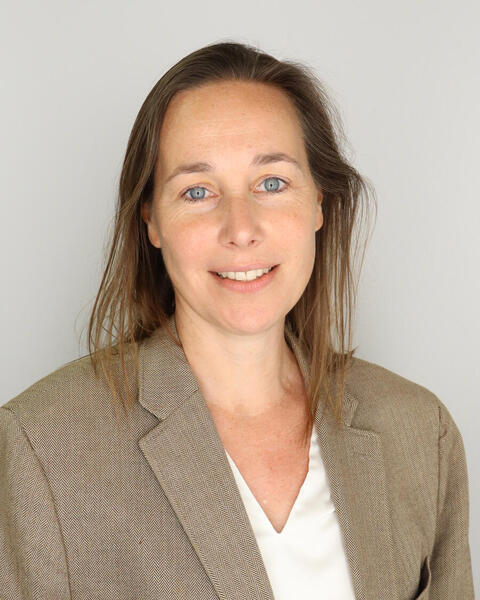
Rosa Rademakers, Ph.D., is a research collaborator in the Department of Neuroscience at Mayo Clinic. Her work focuses on molecular genetic analyses of neurodegenerative diseases, including frontotemporal dementia (FTD), amyotrophic lateral sclerosis (ALS) and early-onset familial Alzheimer's disease. She currently serves as scientific director of the VIB-UAntwerp Center for Molecular Neurology and is a full professor in the Department of Biomedical Sciences at the University of Antwerp, Belgium.
Dr. Rademakers aims to identify novel causal genes, genetic risk factors and genetic modifiers using family-based genetics and association analyses in patient populations that are well characterized. To better understand the function of newly identified genes and mutations and their role in neurodegeneration, she uses complementary in vitro and in vivo molecular approaches.
Focus areas
Genetic regulators of progranulin (GRN). Dr. Rademakers' work in families with a history of FTD led to the discovery of mutations in GRN as a major cause of early-onset dementia. Her research played a key role in identifying and characterizing GRN mutations, discovering regulators of GRN protein expression, and developing a GRN enzyme‑linked immunosorbent assay (ELISA) as a simple blood test to identify symptomatic and presymptomatic mutation carriers.
Current studies focus on identifying genetic variants that may influence whether — and when — individuals with GRN mutations develop dementia, with particular emphasis on variants in the lysosomal gene encoding transmembrane protein 106B (TMEM106B).
- C9orf72 implications in FTD and ALS. Dr. Rademakers identified a noncoding repeat expansion in the C9orf72 gene as the most common cause of ALS and FTD. To help explain the clinical variability associated with this common mutation, her research recognized intermediate repeats in ataxin 2 (ATXN2) and variants in TMEM106B. She further defined the distinct molecular pathologies associated with this mutation, demonstrating that C9orf72‑related disease is complex and involves both gain‑of‑function and loss‑of‑function mechanisms.
- Genetic risk factors in neuropathological subtypes of FTD. Dr. Rademakers established and leads international consortia focused on the collection and multi-omic characterization of brain tissue samples from patients with FTD, including those with frontotemporal lobar degeneration (FTLD) characterized by TDP-43 aggregates (FTLD-TDP) and those with accumulation of FET family proteins (FTLD-FET). These efforts have led to the identification of novel genetic risk factors for FTLD-TDP including TNIP1 and UNC13A. Most recently, this work enabled the discovery of a repeat expansion in GOLGA8A as the first-identified genetic risk factor for FTLD-FET.
Significance to patient care
Discoveries from Dr. Rademakers' research have led to new lab tests that help healthcare professionals diagnose inherited forms of FTD and ALS more accurately and provide better guidance to patients and families. Finding new genes linked to these diseases also helps researchers identify possible targets for future treatments that could prevent symptoms or slow the worsening of disease. Dr. Rademakers continues this work at Mayo Clinic through ongoing collaborations with doctors and scientists in the neuroscience and neurology departments.
PROFESSIONAL DETAILS
Administrative Appointment
- Supplemental, Department of Neuroscience
Academic Rank
- Professor of Neuroscience
EDUCATION
- Ph.D. - Science University of Antwerp
- MA - Biochemistry University of Antwerp
- BA - Biology University of Antwerp